If it walks like a duck and talks like a duck, it's Pilates!
Pilates is not trademarked, and it shows.
Let's talk about it.
First, let me start by saying that If Jospeh Pilates were alive all these years, the chances are high that his method, equipment, and exercises would have evolved and might have looked slightly different than they did for the many years he was alive. But have you ever walked into a studio and found yourself doing a million lunges, using equipment you've never seen in a pilates studio before, with zero attention to breath or modifications, and it feels more like a nightclub with never-ending pulses? Yeah, me too.
"But the studio name has the word Pilates in it!"
That's because the word Pilates is not trademarked, which means ANYONE can use it in a class name or studio name, and there is nothing anyone can do to stop it. A great example of this is CrossFit. CrossFit requires gym owners to have a license agreement if they call themselves a CrossFit gym . It's an annual cost they must pay. I believe that unless Joe and Clara Pilates decided to trademark it in some way, then no one else should have the trademark. It allows Private Instructors like me to have home studios and use the name Pilates.
Now this part gets crazy. Have you ever seen this piece of equipment in a "pilates" studio? yup, that's a mega former.
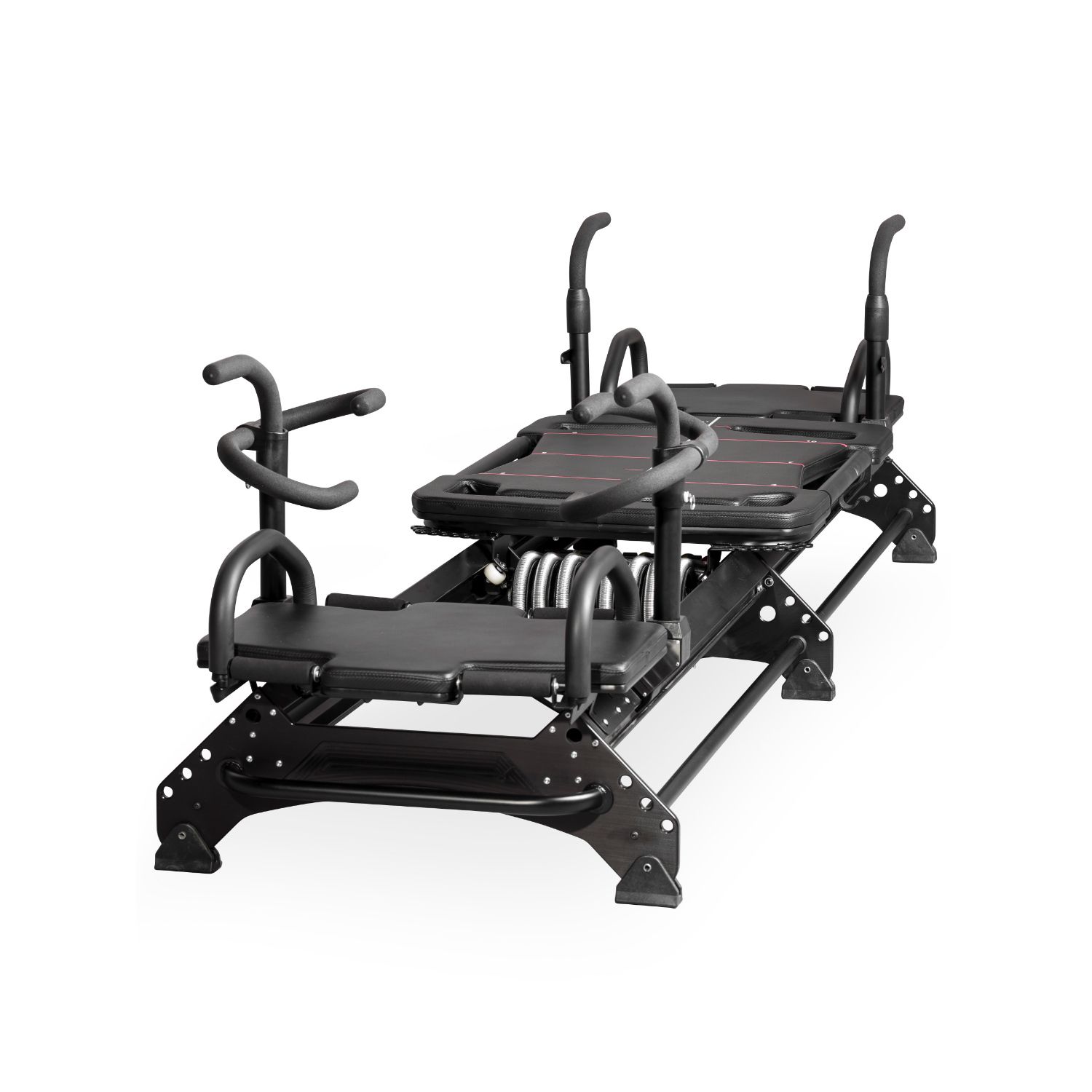
The Megaformer was inspired by the Pilates reformer. The mega former is part of the Lagree Method, invented in the 2000s, and operates under a licensing model. So any studio that calls its equipment a megaformer or says it is a large studio has to pay a licensing fee.
A Great Loop hole is to use the word Pilates. Why? Not only has the word Pilates skyrocketed since Lori Harvey's red Carpet interview in 2023, but why not take advantage of the Trend without having to pay to use the word Pilates?
The method shares similarities with the Pilates method, inspired by it, but it focuses on high-intensity training with minimal rest.
You want to know what else isn't regulated? Certifications.
Pilates certifications aren't like real estate certification or esthetician certification, where you go to a school and then take a regulated exam. Even though Pilates certifications are the MOST expensive fitness certification you can get or take years to complete in comparison to a personal trainer, these certifications, unfortunately, aren't regulated. So anyone can go online and take a pilates course that may or may not be pilates and then call themselves a pilates instructor.
Let's keep in mind that the Pilates method has been used to rehabilitate and cross-train high-performance athletes and injured athletes, and is often used in Physical therapy offices as a supplement for clients with all sorts of needs. Imagine not going through the proper training (600-hour certification) and working with clients like this. Worst, imagine you are a client who needs a low-impact workout that is both rehabilitative and effective, and can accommodate your condition, only to find yourself in front of a "Pilates instructor" with zero training in the method.
Don't get me started on the stories I've heard about studios using ChatGPT to write their certs.
Ok, so what should you do if you're not sure what to look for in a studio? What I always tell my clients, family, and friends is to look at the studio's website and find an about us section. Read where the owner or instructor is certified, and look it up.
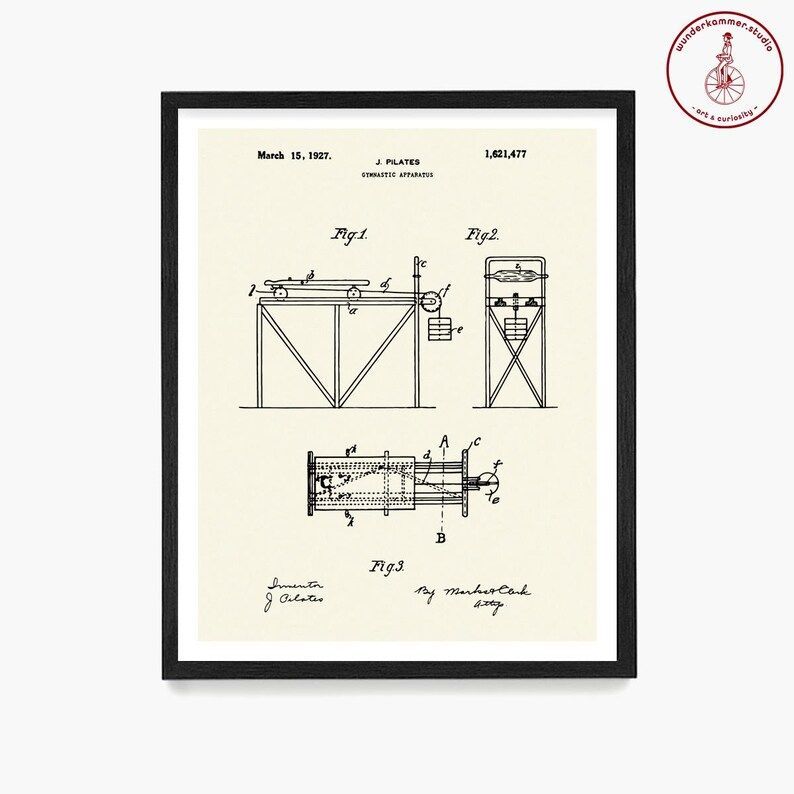
The other thing to look for is the equipment. Make sure it's a Pilates Reformer. I'm showing you the original Ptent that Joseph Pilates filed for his reformer design. This is the first iteration of his design , but this is what would later become the reformer. Isn't that cool?
And lastly, look at the class size. If you want a more intimate experience, make sure to look for smaller class sizes, less than 10, 4-6 is what I like. These types of classes will give you attention and correction, which is key when you are doing Pilates.
However, if you like group classes (more than 10), go in knowing that you might not get corrected on everything, and that's okay as long as you know it going in. It's just not possible for the instructor to correct every move and every angle in a class that size, but it might not be necessary. Sometimes, when you are doing a move for the first time , it might take your body some time to figure out weight distribution and proprioception. But if you have something you need to be mindful of, I recommend smaller class sizes.
Let's Circle Back,
I'm sure Joseph Pilates would have evolved his method if he would have lived to be over 100 years old and I'm a firm believer that as science evolves, so should our approach to the method , and I am NOT a Pilates Purist, but I do find myself explaining to clients why they went to a class that said Pilates and was on completely different equipment or felt totally lost.
I hope this helps bring a little insight into some of the factors behind the confusion around pilates. I'd love to hear what you think! Let me know below!
Marisol